Newborn & baby · session guide
What happens at a newborn photo session
Parents are often surprised when I tell them a newborn session takes most of a morning. Two to four hours is normal, and very little of that time is spent pressing the shutter. Most of it goes on feeding, burping, changing, warming and waiting for that heavy, floppy sleep where a baby barely notices being moved. Below I go through a session from the first message to the finished gallery, because parents who know the shape of the day find it much easier to relax into it.
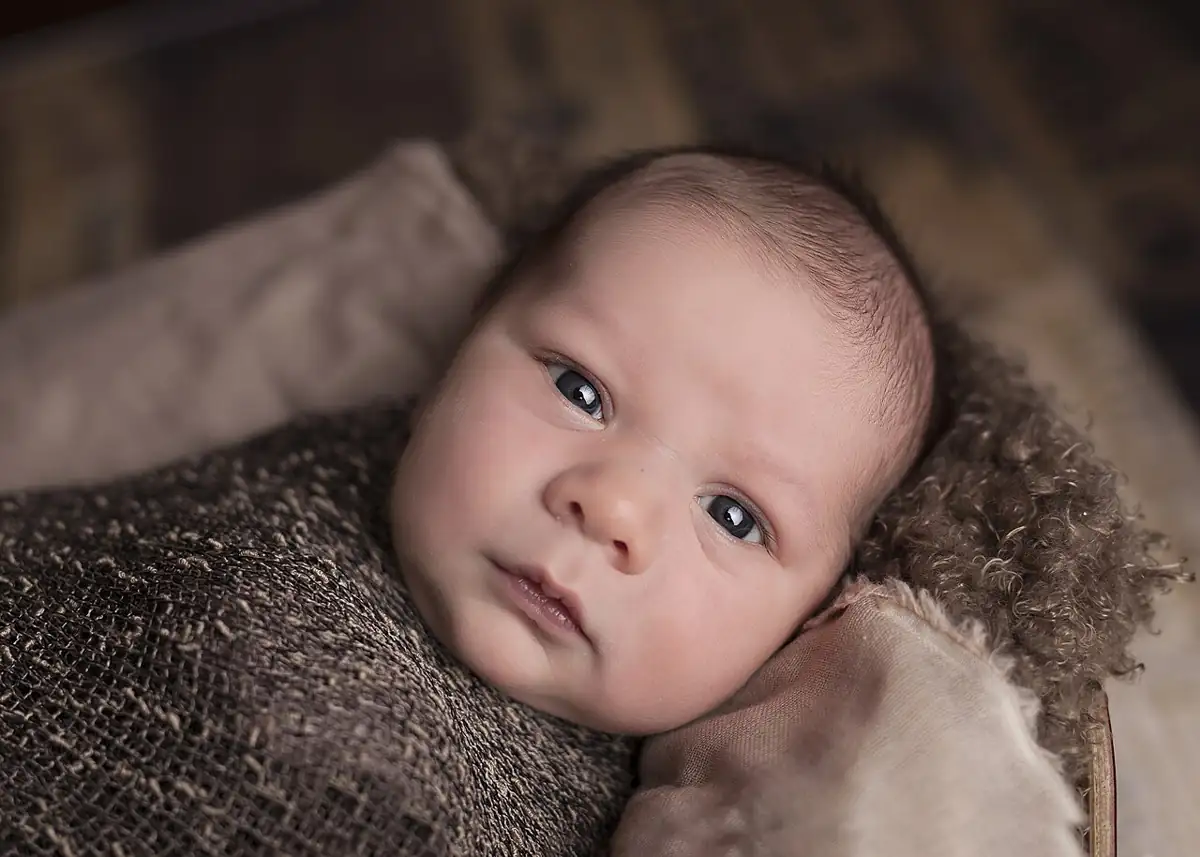
Frame 01Before the day
I start asking questions weeks before the baby arrives. Is this your first child? Will older siblings be there, or a dog who considers the baby his? Do you want simple wraps on a plain backdrop, or a few things from your own home in the pictures? Families who booked a maternity session that leads into the newborn shoot usually settle most of this when we meet for the bump photos.
The date itself stays provisional. Babies arrive when they like, so I hold a window around the due date and we confirm once the baby is home and feeding is going reasonably well. Why I aim for the first two weeks is explained in when to book newborn photos.
What I ask parents to tell me
- How the birth went, and whether mom is recovering from a cesarean
- Whether the baby is breastfed, bottle-fed or both, and roughly how often
- Any medical notes: jaundice, reflux, a NICU stay, anything the pediatrician is watching
- Colors and rooms you love, so the gallery fits the walls it will hang on
Frame 02Studio or your own living room
I have worked both in a studio and in clients' homes, and the session runs much the same way in either place. The baby sets the pace wherever we are. The difference is mostly about light, travel and how much of your home you want in the pictures. If you are still deciding, I compare the options in choosing between a studio, home or lifestyle session.
Frame 03How a typical morning runs
No two sessions follow the clock exactly, but most of mine have this shape. I like a mid-morning start, because many newborns are sleepiest after the early feeds and parents have had a little time to get dressed and out of the door.
| Roughly when | What happens |
|---|---|
| First 30 minutes | Arrival, settling in, a full feed and a burp |
| Next 60 to 90 minutes | Wrapped poses while the baby falls into deep sleep |
| Middle of the session | Unwrapped poses on the beanbag, details of hands, feet and lips |
| Whenever the baby wakes | Top-up feed, diaper change, family frames with the baby awake |
| Last 30 minutes | Parents and siblings, any keepsake or heirloom shots |
The middle can stretch or shrink. A baby who sleeps like a stone might give me everything in two hours. A baby with wind or hiccups can need four, and that is fine. I never book anything straight after a newborn session for exactly that reason.
Frame 04Arrival and the first feed
The session nearly always begins with a feed. A baby with a full tummy sleeps longer and curls more easily, so I ask parents to hold off the last feed until they arrive if they can do it without a meltdown in the car. While the baby eats, I warm the room, lay out wraps and check the light.
Expect the space to feel uncomfortably warm. Newborns lose heat quickly once they are undressed, and I keep the room somewhere around 78 to 82°F while the baby is unwrapped. Dress in light layers, and bring a bottle of water for yourself. Moms who are nursing tend to feel the heat most.
Frame 05Sleepy poses and wrapped shots
Once the baby is in a deep sleep I work through a sequence, and I almost always start with wrapped poses because they are the most settling. A snug wrap calms the startle reflex, keeps the baby warm and lets me work at floor level. After that come unwrapped poses on a padded beanbag, and then any props or keepsakes.
How I move the baby
Every change is slow, one limb at a time, with a warm hand on the baby and a pause to let them resettle before I pick up the camera. If a baby tells me they dislike a position by stretching out of it or waking, I let it go. Babies who are comfortable curl into the shapes on their own.
About the famous poses
Some poses you may have seen online, such as a baby resting their chin on their hands, are built from two or three frames combined afterwards, with a parent's or my hand supporting the head in every one. Newborn posing safety explains how I handle this, and what you should never be asked to do.
Your own things
A blanket a grandmother knitted, a hospital bracelet, a parent's wedding ring resting next to tiny toes: these personal details are often the frames parents print. If the baby has an heirloom gown waiting for the church, I am happy to photograph it now too, and the later day is covered in portraits for a christening or baptism.
Frame 06Parents and siblings
I usually take family frames either early, while everyone is fresh and the baby is still drowsy from the first feed, or at the very end once the baby has eaten again. Parents do not need to be posed like models. I tend to mix a few posed portraits with relaxed, unposed moments, a parent's nose against the baby's head, a hand on a back, and parents often pick those quiet frames as their favorites.
Older brothers and sisters do best with a short, clear job and a quick exit to a snack and a cartoon. I cover timing, seating and that first picture of them together in photographing a newborn with siblings. If you are bringing two babies home at once, the extra planning is in my notes on twins and multiples.
Frame 07When the baby will not settle
Some babies stay awake, hiccup or cry for an hour. As a mother of two boys I know how stressful that feels when someone is watching, and I want you to know that it happens all the time. I plan for it. Swaddling, white noise, a warm hand on the tummy and another short feed usually work in the end. If they do not, I switch to awake portraits, and many parents end up loving those wide-eyed frames. More on what I try is in calming a fussy baby during a shoot.
Frame 08What to bring
- Enough milk or formula for two or three feeds, plus anything you need to warm a bottle
- Spare diapers, wipes and a change of clothes for the baby and for you (newborns are generous with surprises)
- A pacifier, if the baby already takes one
- Any keepsakes you want included, such as a family blanket, a gown or a small toy
- Snacks and water for the adults, and a comfortable cardigan for the drive home
- The outfits for your family frames, on hangers so they stay unwrinkled
For parents in the pictures I suggest plain, soft colors in comfortable fabrics. Your faces and the baby are the focus, so skip stripes, busy patterns and logos. Solid colors also age well, which matters for pictures you will look at for decades. My longer guide to choosing family outfits goes through color and pattern in more detail.
Frame 09After the session
Editing a newborn gallery takes time. Skin is often blotchy, peeling or a little yellow in the first days, and each image is retouched gently so the baby still looks like your baby. When I set up viewing, I either meet parents for a viewing and ordering appointment about two to three weeks after the session or share a password-protected online gallery. Proofs get basic retouching; the images you choose to print get the fuller treatment. How that process usually works is explained in online proofing galleries.
Newborn galleries suit a small album very well, because the story runs naturally from wrapped details to family frames. I walk through formats in albums and photo books for portraits. The other baby topics, from milestones to cake smash, are all gathered on the newborn and baby page.