Newborn & baby · choosing a format
Studio, home or lifestyle newborn session
Newborn sessions tend to take one of three forms: posed portraits in a studio, posed portraits set up in your home, or a relaxed lifestyle session that follows the family through an ordinary morning. I have worked in a studio and in clients' homes, and I like all three for different reasons. Which one you pick decides the look of the gallery, the light, and how tired everyone is by lunchtime.
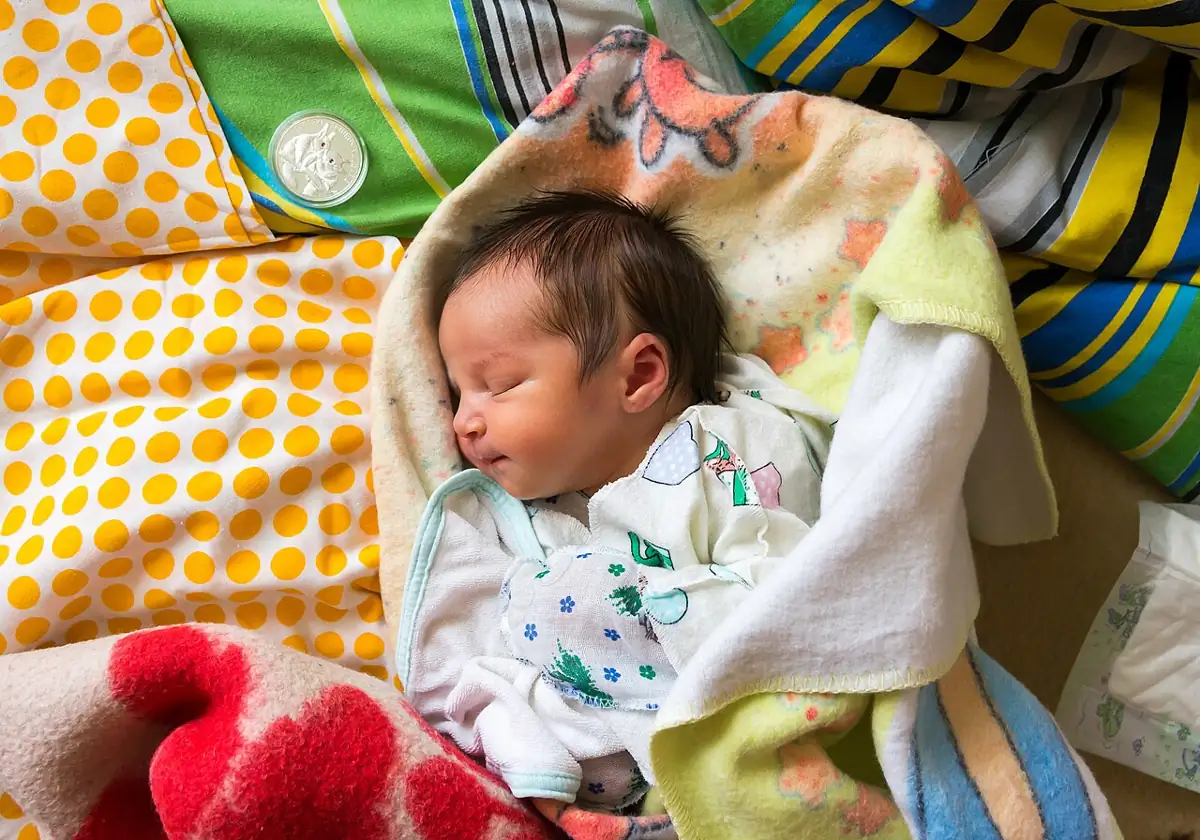
Frame 01The studio session
A studio gives the photographer full control. When I work in the studio, the room is warmed to the right temperature before the family arrives, backdrops and wraps are within reach, and the light behaves the same at nine in the morning as it does at noon, whether it comes from a big window or from a softbox. Because everything is ready, posed sets move quickly once the baby is asleep, and I can switch from a cream backdrop to a dark one in a minute.
The downside is the trip. Parents are tired, the car seat has to be loaded, and a newborn who sleeps through the drive may wake as soon as you walk in. If the studio is far from home, ask whether there is a quiet corner for feeding and somewhere for a recovering mom to sit comfortably, or even lie down.
Who the studio suits
- Parents who want a classic posed gallery with clean backdrops
- Homes with small windows, deep shade or very little floor space
- Families who would rather not tidy or move furniture
Frame 02Posed portraits at home
For a home session I bring a portable kit: a posing beanbag, a heater, a few backdrops and a bag of wraps. I set up near your largest window and work through the same poses I would in a studio. You stay in your own space, siblings can come and go, and the nursery or your own bed can appear in a few frames. For a mom recovering from a cesarean, not having to get into a car can make the whole day easier.
The catch is light and space. A home in deep shade or with small windows makes posed work harder, and I may need to move a chair or a side table. Setting up and packing away adds time at both ends, so a home session rarely ends up shorter than a studio one.
Frame 03Lifestyle sessions
A lifestyle session has almost no posing. I follow feeding, a diaper change, a nap in a parent's arms and the siblings meeting the baby on the sofa. Unmade beds and burp cloths stay in the frame. Parents who dislike the stylized look of baskets and hats often prefer it, and it is the gentlest format for babies who have had a difficult start or a stay in the NICU.
Because the baby is never posed on a beanbag, most of the questions raised in safe newborn posing simply do not come up. The trade is that you get fewer close detail frames of a sleeping, curled baby. In my own work I like to mix natural, unposed moments with a few posed portraits in every session, so even a lifestyle morning usually includes some quiet close-ups of hands and toes.
Frame 04How the three compare
| Question | Studio | Home posed | Lifestyle |
|---|---|---|---|
| Who controls the light? | Photographer | Your windows | Your windows |
| Travel with the baby? | Yes | No | No |
| Sleepy curled poses? | Many | Many | Few |
| Your home in the pictures? | No | Partly | Throughout |
| Tidying needed? | None | One room | Several rooms |
| Siblings and pets? | Short visit | Easy | Part of the story |
The age of the baby matters as well: a lifestyle session is more forgiving for a baby who is three or four weeks old and no longer sleeps through everything, while posed work goes best in the first two weeks. My notes on the ideal age for newborn photos explain why.
Frame 05Light at home: what I look for
When I walk into a house for a newborn session, the first thing I do is find the biggest window that does not have direct sun coming through it. A north-facing window, or any window on the shady side of the house at that time of day, gives soft, even light that flatters newborn skin. Direct sun makes hard shadows and overheats the baby, so I pull a sheer curtain across or move to another room.
I grew up in Sweden, where winter daylight is short, and I have loved a good big window ever since. The same principles I use for window-light maternity portraits apply to a sleeping baby: put the light to one side, turn off the overhead lamps, and let the shadows fall gently across the face. The broader ideas in working with window light apply just as well to a nursery as to a studio.
Frame 06Preparing the house
- Turn the heating up, or the air conditioning down, an hour before I arrive
- Clear a patch of floor about the size of a single bed near the biggest window
- Switch off overhead lights and lamps, which tint skin yellow
- Tidy only what will be in frame; the rest of the house can stay lived-in
- Put plain, pale sheets on the bed if you want family frames there
- Have a spot ready where pets can rest away from the setup
Plain bedding photographs best, and a white or pale sheet on the parents' bed acts like a giant reflector. If the dog or cat is part of the family story, a quick supervised introduction can make a sweet frame, and I share how I handle animals in photographing families with their pets.
For much of the year in Baton Rouge the air conditioning runs hard, and a room that feels pleasant to you is chilly for an undressed newborn. I will ask you to raise the thermostat for the room we use, and I bring a small heater as well. More on how the climate shapes my planning is in heat, humidity and light in South Louisiana.
Frame 07A quick way to decide
When parents cannot choose, I ask four questions. How do you feel about getting into the car in the second week? Do you picture clean backdrops and wraps, or your own rooms and your own blankets? Is there a bright, uncluttered spot at home? And how will older children cope with a stranger rearranging the living room?
If the car sounds hard and the house has a good window, home wins. If you want a classic gallery and the house is dark or full of boxes, the studio is easier. If you mostly want to remember what those first days felt like, with the baby on your chest and the dog sniffing at the blanket, choose lifestyle.
Frame 08Mixing formats
Many of my sessions combine approaches, starting with a few lifestyle frames while the baby feeds and then setting up a short posed sequence once they are deeply asleep. If you want a family portrait with older children too, a home session usually makes that easier; the tips in photographing big brothers and sisters with the baby still apply. A baby who struggles in the car may settle more easily at home, and I share what else helps in calming a baby who is wide awake.
Whatever you choose, the basic flow of the day is the one described in my newborn session walk-through, and the rest of the newborn guides are listed on the baby photography hub.