Newborn & baby · timing
When to book newborn photos
When parents ask me when to do newborn photos, my answer is nearly always the same: somewhere between day 5 and day 14. In that window most babies still sleep deeply, curl into the shape they had in the womb and let me move a hand or a foot without waking. That timing shapes everything else, from when you contact a photographer to what we do if the baby arrives early, late or needs time in the hospital.
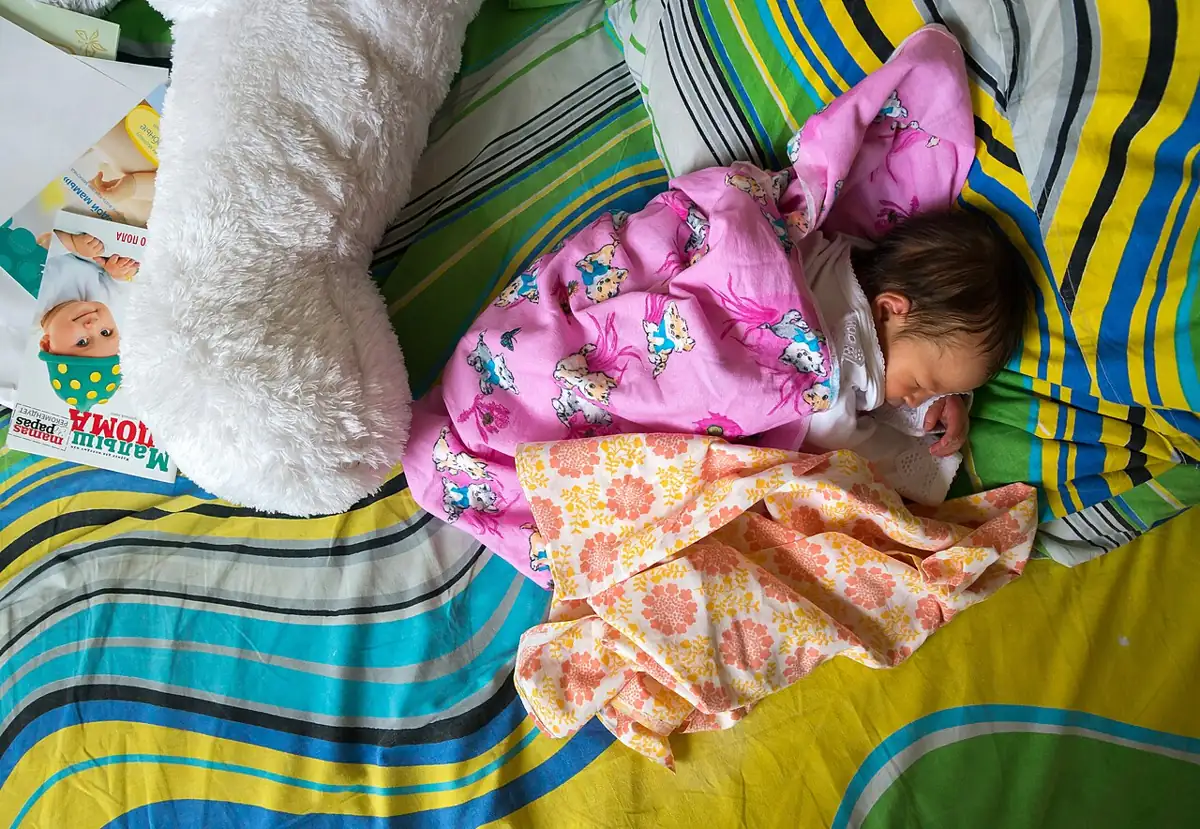
Frame 01Why days 5 to 14 work so well
Newborns spend most of the first fortnight in long stretches of sleep, and their joints are still loose enough that curled, tucked poses feel natural to them. A baby who is comfortable in a curl tends to stay asleep while I adjust a wrap or warm a foot. That makes the session gentler for the baby and calmer for the parents.
By day 5 the family has usually had a few nights at home, feeding has started to settle, and most moms can manage a car ride or a morning with a photographer in the house. By day 14 the sleepy phase is still there for most babies, though some are already starting to wake more easily.
Frame 02What changes after two weeks
Around the third week many babies start to wake more easily, startle when they are unwrapped and spend longer periods alert. Baby acne and cradle cap also tend to appear around then, which I can soften in editing but not make disappear completely in every frame.
A later session is still possible, and I photograph older newborns regularly. An older baby simply gives more open eyes and fewer sleepy curls, so I plan a different set of poses, with more wrapped frames and more time in a parent's arms. It helps to read how a newborn shoot is usually run before you choose a date, so you know what the morning involves.
Days 5 to 14
Long, deep sleep. Natural curl. Many unwrapped and detail frames. Baby tolerates gentle repositioning. Sessions often finish within two or three hours.
Weeks 3 to 6
Lighter sleep and more startling. More wrapped poses and parent-held frames. Awake portraits with focused eyes. Sessions usually run longer, so I keep the morning free.
Frame 03Why days 1 to 4 are usually skipped
The first few days belong to recovery and feeding. Mothers who had a cesarean birth are often still sore, milk may not have come in yet, and most babies lose a little weight in their first days before they start gaining again. Jaundice is also common early on: the American Academy of Pediatrics notes that most babies develop some jaundice in the first few days, and babies sent home early are usually seen again within a couple of days. I would rather work around those checkups than compete with them.
The exception is a fresh 48 or hospital session, a short documentary set taken at the birth center. There is no posing at all, and some families book it alongside a posed session a week or so later. If your hospital allows photographers on the ward, it can be a lovely record of those first hours.
Frame 04What each age tends to give you
| Baby's age | What I usually see | Best suited to |
|---|---|---|
| Days 1 to 2 | Hospital setting, family visits | Documentary, no posing |
| Days 5 to 14 | Deep sleep, natural curl | Classic posed newborn session |
| Weeks 3 to 6 | Lighter sleep, more alert | Wrapped poses, parents' arms |
| Weeks 6 to 10 | Eye contact, early smiles | Awake portraits, family frames |
Babies do not read the table, of course: I have photographed sleepy three-week-olds and wide-awake six-day-olds.
Frame 05How to reserve a date before the birth
Because nobody knows the exact birthday, I take a provisional booking based on the due date. You let me know when the baby arrives, and we fit the session into the open days in the following week or two. Most newborn photographers limit how many babies they book around the same dates, so reserving during the second trimester is common and saves a scramble later.
- Contact photographers once you are about halfway through the pregnancy.
- Ask how they handle early or late arrivals, and how much notice they need.
- Send a short message from the hospital or as soon as you are home.
- Confirm the session day once feeding is going reasonably well.
When you first talk to a photographer, it is worth asking about their newborn training and how they keep babies safe; I list those in questions worth asking before you commit. If you also want pregnancy portraits, the timing advice in the best weeks for maternity photos lets you plan both at once, and combining bump and baby sessions explains how I link the two.
Frame 06Early and late arrivals
A baby who arrives a week early simply moves the window forward. A baby who is late does the same in the other direction. What does cause trouble is not hearing from you: by day 20 the sleepy days may already be behind us. A one-line text from the hospital is enough to get you on the calendar.
Premature babies and hospital stays
Babies born early, or who spend time in a neonatal unit, follow a different calendar. I count from the original due date rather than the birth date, because a premature baby's sleep and muscle tone tend to match their corrected age. The AAP explains how pediatricians use corrected age for preemies in the same way when they look at development. Medical equipment, feeding tubes or a recent procedure are reasons to keep the session short, simple and wrapped. Ask your pediatrician if you are unsure whether the baby is ready, and tell me about anything that affects handling.
Frame 07If you missed the window
Plenty of families only think about photos when the baby is a month old, and that is fine. At four to eight weeks babies start to hold eye contact, and many begin to smile socially by about two months, which gives a portrait with more personality. Many parents then carry on with sessions through the year, a plan I describe in milestone portraits at 3, 6, 9 and 12 months.
A baby who is three or four weeks old can still be photographed in sleepy poses on a good day. It usually takes longer to get there, so leave the whole morning free and do not plan anything else after the session.
An older baby who resists being put down is also more likely to need extra help settling. My tricks for that are in settling an unhappy baby for the camera.
Frame 08Fitting the session around the household
A morning start suits most newborns, because they tend to be sleepier after the early feeds. When I schedule small children, I try to catch them rested, fed and in a good mood, and newborns are no different. If older children are part of the plan, choose a day when they are rested and can leave after their part. Advice on that is in getting siblings into the newborn shoot.
If a car journey right after a cesarean sounds like too much, a session at home may be the easier choice, and I weigh that up in studio versus home for newborns. Whatever the timing, the safety habits stay the same, and they are set out in how I keep newborns safe during posing. The rest of the newborn topics, from twins to christening portraits, are gathered on the newborn and baby photography overview.