Family and children · pets
Family photos with pets
For many households the dog is as much a part of the family as anyone, so leaving it out of the portrait feels wrong. I have photographed pets on their own and with their families, from very large dogs to tiny ones, and with a little preparation it goes well. A pet usually gets more laughs out of a family than any prompt of mine. Below is how I plan for it and what to bring, along with the heat precautions we need in South Louisiana.
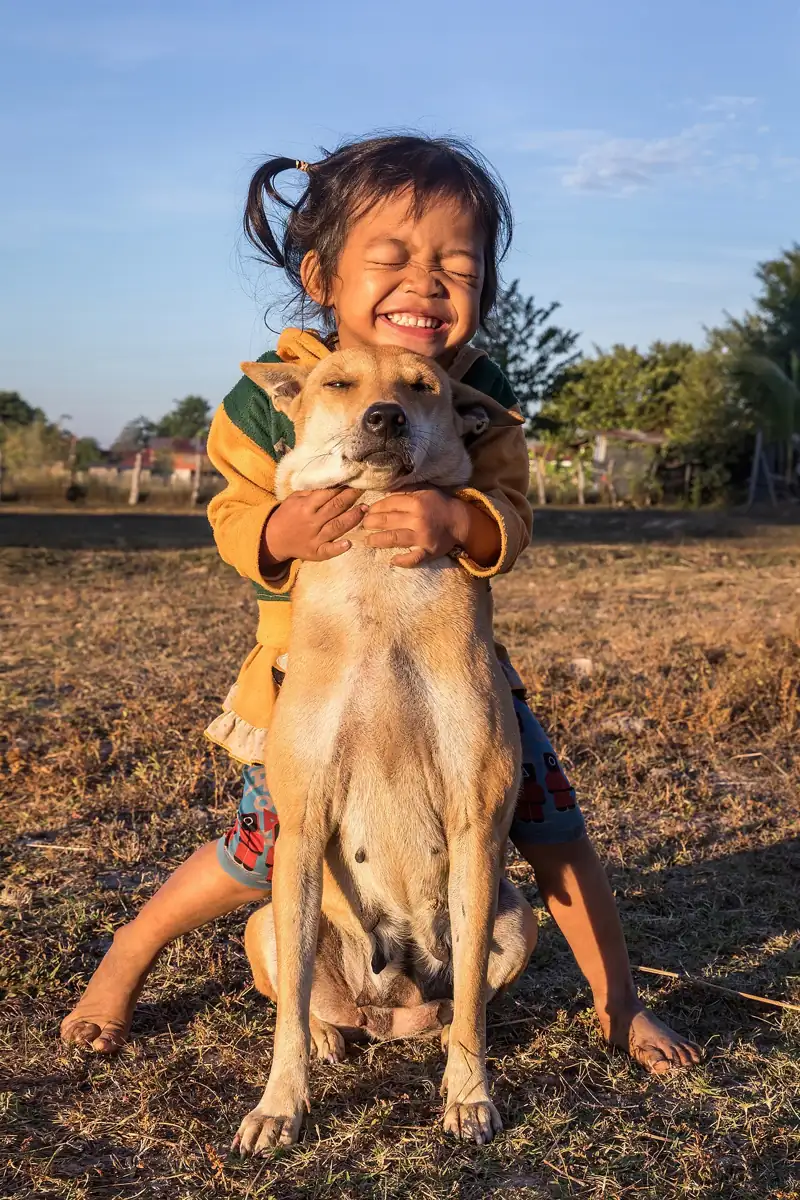
Frame 01Tell me about your pet when you book
The more I know beforehand, the better I can plan. I like to hear the pet's name, age and size, whether they are nervous around strangers or other dogs, what treats or toys they go wild for, and whether they will sit or stay on command. A reactive dog changes where I suggest we meet. A deaf or elderly dog changes how I get their attention. Whatever the answers are, I can then choose a location and a time that suit the animal as well as the people.
Frame 02Wear the dog out first
A long walk or a game of fetch before the session takes the edge off an excitable dog. A tired dog will settle and look toward the camera far more readily than one who has spent half an hour in the car. Older or calmer dogs need less of this, but even they benefit from a sniff around the location before the camera comes out. I usually give a dog five minutes to explore and say hello to me before I take a single frame.
Frame 03Bring a handler
Parents cannot hold a lead, manage a toddler and smile at the same time. Ask a friend or relative to come along just to handle the dog. They can hold the lead out of frame, call the dog's name to get its attention, and walk it away when the family frames without the pet begin. A lead that crosses the picture can usually be removed in editing, so a short lead held tight is better than letting a dog off in an unfenced area. Many parks have leash rules anyway, so check before you plan an off-lead frame.
If toddlers are part of the session too, the handler is even more important. My page on photographing children aged one to three explains how short their attention span is; you do not want the dog and the toddler both falling apart at the same moment.
Frame 04Treats, noises and attention
To get a dog looking toward the lens, the handler stands just behind me with a treat at head height. Squeaky toys or an odd noise work for a second or two; after that most dogs lose interest, so I have to be quick. Small soft treats are best because they are eaten in one bite without crumbs on the face.
Children are often better at getting a dog's attention than adults. Asking a child to hold a treat and look at the dog usually gives a good candid frame of the two together. The dog's reaction to a child's giggle is often what makes the child laugh for real, which ties in with my page on getting children to laugh naturally.
Frame 05Where and when
Pick a location where dogs are allowed and where there is little traffic. A quiet corner of a park on a weekday morning is better than a busy campus lawn on game weekend. Watch for other dogs, ducks and squirrels; a single squirrel can end a pose. The page on lakeside and park settings describes some open green spaces in Baton Rouge.
Dogs overheat more easily than people realize, and our humidity makes it worse. The American Kennel Club lists short-nosed breeds, dogs with thick, double or dark coats, overweight dogs and elderly dogs as the most at risk, and its guide to overheating in dogs describes the warning signs, such as heavy panting, thick drool and bright red gums. In warm months I book pet sessions as early in the morning as possible, keep them in shade, and stop for water often. If the dog starts to struggle, the session ends there.
For the bigger picture of when it is comfortable to be outside here, see my notes on heat, humidity and storm season.
Frame 06Which setting suits which pet
| Pet | Best setting | Why |
|---|---|---|
| Energetic young dog | Fenced park or big yard | Room to run, safe if they slip the lead |
| Calm adult dog | Park, field or home | Will sit and stay with the family |
| Elderly or ill dog | Home or own yard | Familiar, short, lots of lying down |
| Cat | Home, near a window | Cats dislike new places |
| Rabbit, bird, small pet | Home, on a lap or table | Secure and quiet |
Frame 07Cats and smaller pets
Cats rarely enjoy being taken somewhere new, so I photograph them at home, in a room they already like, near a window. Let the cat settle and bring the family to it instead of moving the cat around. A feather toy held just above my lens gets a cat's eyes up for a moment, and a favorite sunny windowsill often gives the best light in the house. Rabbits, birds and other small pets also do better at home, held securely by someone they trust.
Frame 08Camera settings for pets
If you are photographing your own pet, these are my starting points. Dogs move fast, so use 1/500 s or faster for a running dog and at least 1/250 s even when they are sitting. Focus on the eye nearest the camera; most newer cameras have animal eye detection, and it is worth switching on. At f/2.8 to f/4 a dog's nose and eyes stay reasonably sharp. Wider apertures leave either the nose or the eyes soft, especially on long-nosed breeds.
Black dogs and white dogs
Very dark fur turns into a shapeless black blob if you expose for a bright sky. Soft, even light such as open shade or an overcast day helps a lot, and I tend to expose a little brighter for black dogs and recover the highlights later. White dogs are the opposite: in direct sun the fur loses all detail, so shade helps there as well.
Frame 09Fitting the pet into the session
- Family with the pet first, while everyone is fresh.
- Children with the pet, one or two frames each.
- The pet's own portrait.
- The handler takes the pet away and the rest of the session continues.
That way an overexcited dog does not affect every frame. If you only want a few frames with the dog, a short format like a mini session can work well. Clothing matters too: dark fur shows on pale clothes and the reverse, so bring a lint roller. My outfit guide for families covers colors, and the maternity posing guide has a short note on including a dog that will soon meet a new baby. Other session types are listed on the family portraits hub.
What to pack for your pet
- A short lead and a plain collar or harness
- Small soft treats, more than you think
- A squeaky toy or the favorite ball
- Water and a bowl
- A towel for muddy paws
- Poop bags
- A lint roller for the humans