Family and children · ages 1 to 3
Photographing toddlers
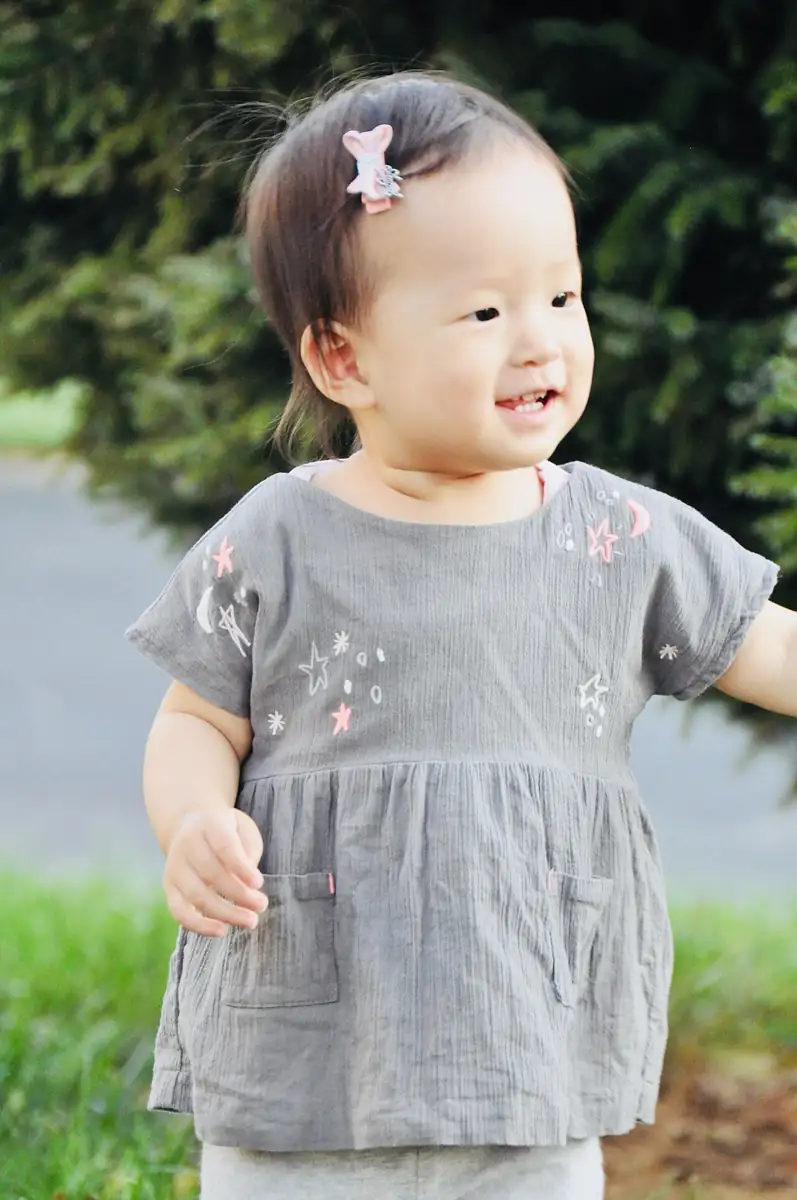
Toddlers are the hardest age I photograph, and often the most fun. They will not sit where you put them, but if you let them explore, you get curious, funny expressions that posing rarely produces. My own interest in photography came back when I started following my two boys' first steps with a camera, so I have a soft spot for this wobbly, busy age. Below is how I plan a toddler session and what I ask of parents, plus the camera settings I start from if you want to try this yourself.
Frame 01Book around the nap
A rested, fed toddler is a different child from one who skipped a nap. When you book, tell me your child's usual routine and we will pick a time after the main nap. For many families that means an early morning session or one in the late afternoon. Those two windows also happen to have the softest light of the day, which is why I have always scheduled outdoor sessions early or late. The notes on local light and seasons explain why those hours work so well outdoors.
Sleep needs at this age are big. The American Academy of Sleep Medicine recommends 11 to 14 hours in every 24 for one- and two-year-olds, naps included, and the AAP supports those guidelines. You can see the full chart on HealthyChildren.org. In practice that means a session squeezed between daycare and dinner rarely goes well. I would rather move the date than photograph a tired child.
The car ride counts
If the location is more than twenty minutes away, try to stop your toddler falling asleep in the car. A five-minute car nap followed by being woken up for photos is a recipe for tears. Some parents keep a window open, sing, or hand over a snack at the halfway point.
Frame 02Keep it short
Most toddlers give you about 20 good minutes before they lose interest. I work quickly at the start, while they are curious about the new place, and save the slower family frames for when the child is happy to sit on a lap. If a photographer suggests a 30-minute session for a two-year-old, they probably know how long toddlers last. Short formats like mini sessions suit this age well for exactly that reason.
How a toddler session usually runs
- Arrival and exploring (5 minutes). No camera pointed at anyone yet. The child walks around, picks up leaves, gets used to me.
- Full family frame (5 minutes). Everyone together while energy is still high. I take a lot of frames quickly.
- Play and movement (10 minutes). Walking, running toward a parent, bubbles, swinging. This is where most of the favorites come from.
- Snack break. A few sips of water, a cracker, a cuddle.
- Quiet frames (5 to 10 minutes). Sitting on a lap, reading a book, looking at a flower up close.
- Parents alone, if the child will stay with a helper for a few minutes.
Frame 03Follow the child
Toddlers want to run, climb, pick up sticks and look at bugs. Instead of fighting this, I build the session around it:
- Walking hand in hand with a parent down a path, photographed from behind or ahead.
- Throwing leaves or blowing bubbles while I catch the reaction.
- Sitting on a step or a low wall to look at a book.
- Being swung or lifted by a parent, which almost always gets a laugh.
Games like peekaboo and silly sounds from behind the camera help too. The page on coaxing honest smiles out of children has a longer list.
What works at each age
| Age | What they do | What I plan |
|---|---|---|
| 12 to 18 months | Wobbly walking, sitting, grabbing | Lap frames, first steps toward a parent, close-ups |
| 18 months to 2 | Running away, saying no | Chasing games, hand-holding walks, bubbles |
| 2 to 3 years | Pretend play, simple instructions | Little tasks: find a red leaf, give mom a hug |
If your child is still under a year, the milestone sessions at 3, 6, 9 and 12 months are planned quite differently, mostly around sitting and crawling.
Frame 04Settings that keep up with a toddler
For parents and hobbyists photographing their own children, toddlers are hard on cameras as well as on patience. These are the starting points I use, and I adjust them as I go:
- Shutter speed: 1/500 s or faster for a running child; 1/250 s can be enough when they are sitting still.
- Aperture: f/2.8 to f/4 for a single child. Wider than that and a toddler moving a few inches will slip out of focus. Use f/5.6 or more for a family group.
- ISO: let it rise. A little grain is far better than a blurry face, especially in open shade.
- Focus: continuous autofocus, with face or eye detection if your camera has it.
- Burst mode: toddler expressions change every half second, so shoot short bursts.
Get down to their eye level. Pictures taken from adult height look down on the top of a small head. Kneeling or sitting on the ground makes a big difference, and you look less like a looming stranger. Soft light helps as much as any setting; my guide to working with natural light explains how to find open shade.
Frame 05What parents can do
Try not to say "smile" or "look at the camera" over and over. Toddlers pick up on the tension and dig their heels in. Let me lead, stay close, and step in only when I ask. A parent laughing at something silly behind me often does more than any instruction.
Bring small, mess-free snacks, a water cup and one favorite toy. Keep the toy hidden until it is needed, then use it as a reward or a distraction. When choosing snacks, remember the usual choking advice for this age: the AAP lists foods like whole grapes and popcorn as hazards for children under four, and their choking prevention page has the full list. A toddler running around a park should not be eating at the same time anyway.
The toddler session bag
- Crackers, puffs or a fruit pouch, nothing sticky or brightly colored
- Water in a plain cup or bottle
- One favorite toy, kept out of sight
- A full spare outfit and spare shoes
- Wipes, a small towel and a hair brush
- A blanket to sit on
- Bubbles, if your child likes them
Frame 06Clothes for active little ones
Choose soft clothes they can crawl and run in, and shoes they already know how to walk in. New shoes on the day of the session mean a toddler who stops every few steps to look at their feet. Pack a full spare outfit. The family wardrobe page explains how to fit a toddler's outfit into the whole family's colors.
Frame 07Where toddler sessions go well
The best spots for this age are safe and open, with something to look at: a path to walk along, a low wall to sit on, grass to run in, ducks to point at. Busy roads, water without a barrier and steep steps make parents nervous, and nervous parents mean a nervous child. Around Baton Rouge I like quiet corners of parks early in the day; my notes on the lakes and City Park describe the kind of space I mean. A session at home is often easiest of all, because the child already feels safe there.
Frame 08Siblings, pets and toddlers together
When a toddler shares the session with an older brother or sister, I photograph the toddler with the sibling early, then let the older child have some solo frames while the little one plays. Advice on combining children of different ages is in the brothers and sisters guide. A gentle family dog can actually calm a toddler, and I have a page on including the dog in family portraits. If your toddler is turning one, a cake smash session is another way to capture this age, and you can see every related guide on the family and children hub.