Locations · lakes and parks
The LSU lakes and City Park
A chain of shallow lakes lies between the LSU campus and City Park, the largest of them University Lake. Paths, bridges and grassy banks run around the water, cypress trees stand in the shallows, and in late fall big white pelicans drop in to rest. For me it is the easiest place in Baton Rouge to make relaxed, walking family portraits with beautiful evening light.
Frame 01My favorite water in town
I drive past the lakes all the time, and they still pull my eyes off the road. On a still evening the water turns into one big mirror with the cypress trees dark against it. For a family session it is the most relaxed public setting in Baton Rouge, because walking by the lakes is something people here do anyway, and nobody feels watched. When word gets around that the pelicans are back, it is also where you will find me with a long lens.
Frame 02What the lakes give a portrait
Open water reflects the sky, so faces near the shore pick up soft fill light even when the sun is low behind them. At sunset the lakes turn pale gold and pink, and a family standing on the bank can be framed against glowing water and dark trees on the far side. Cypress trees growing at the edge, with their knees poking out of the shallows, give the scene a Louisiana look without much effort.
The banks are mostly open, which means there is little shade before the last hour of daylight. Plan around that, using the timing tips in the guide to seasons and light in South Louisiana. Where there is shade, it comes from the big oaks near the roads and in the park, which behave just like the trees in my live oak notes.
Backlight over water
My usual setup at sunset is simple: the family on the bank, the sun low behind them and slightly to one side, and the water filling the background. The bright water can fool the camera into making faces too dark, so I expose for skin and let the water go bright. A longer lens, 85mm or more, compresses the far shore into a soft band of trees. The reasoning behind that choice is in choosing a lens for portraits.
Frame 03Walking portraits
The paths around the lakes suit sessions that move. A couple strolling hand in hand or a toddler running ahead with the dog looks natural here. I walk backward in front of the family or follow from the side with a longer lens. Keep to one side of the path and let runners and cyclists go by without having to slow down.
Walking takes the pressure off children who freeze when they are asked to sit still. Give a toddler a job, like finding the biggest stick or counting ducks, and they forget about the camera. There are more tricks in photographing toddlers. The paths are flat and easy, which also makes the lakes one of my first suggestions for an outdoor maternity session late in pregnancy.
Frame 04Pelicans in late fall and winter
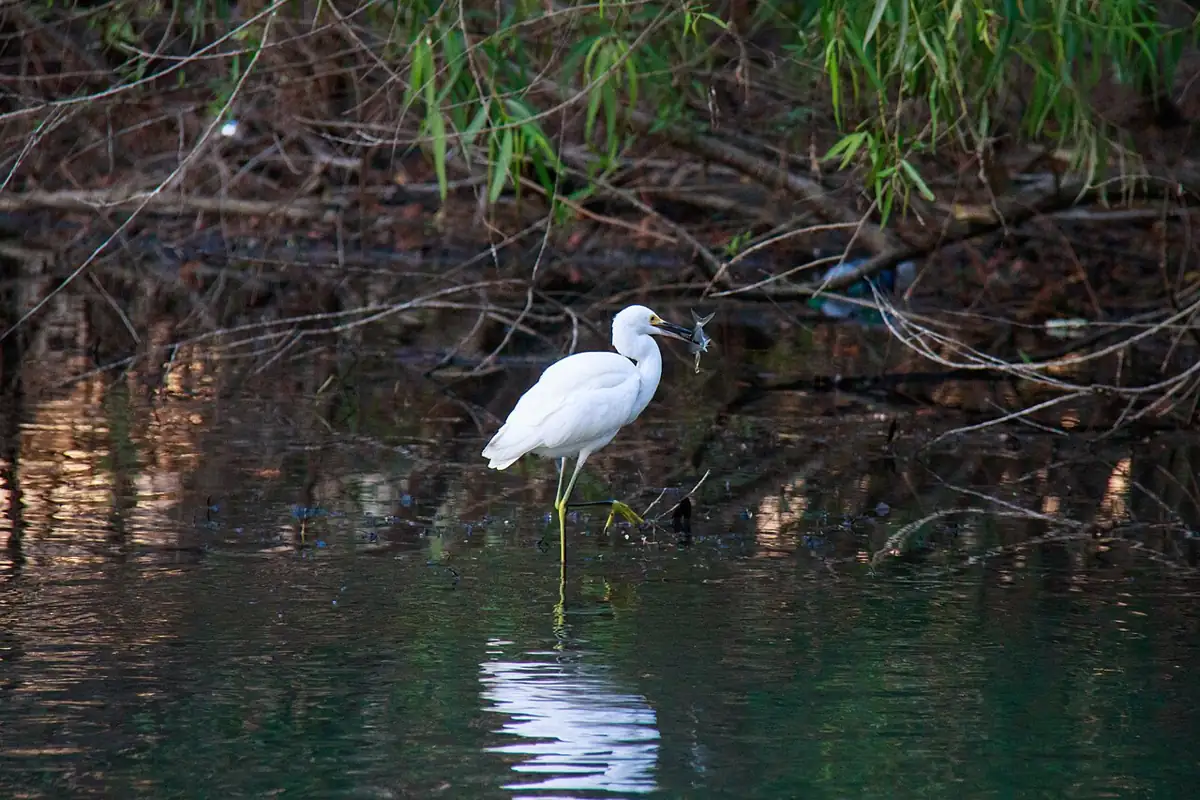
Every year American white pelicans come down to the LSU lakes during their fall migration. In my experience the big gatherings show up in late fall, and I have photographed them landing on the water in late November: huge white birds with black wing tips and orange bills, gliding in low and skidding to a stop. Birds come and go through the winter and into early spring, and numbers vary a lot from year to year. Sometimes the biggest flock stays only a couple of weeks.
Pelicans make a lovely background for a family portrait, especially with children who are thrilled to see them. Keep your distance and do not chase or feed them. A long lens lets you photograph the birds without disturbing them. For birds in flight I raise the shutter speed to 1/1000 s or faster and use continuous autofocus. If you get more interested in the birds than the portraits, there is a separate guide to photographing birds and nature.
Pelicans tend to rest in groups on the open water and fly in to land in long lines. If you see a flock overhead, stop and watch the direction they circle, then get the family on the bank with the water behind them. You may have a minute or two.
Frame 05City Park
City Park, on the north side of the lakes, adds lawns, large trees and more paths. It is a good place for families with small children because there are places to sit, room to run and shade under the trees. City Park is run by BREC, the parish recreation and park commission, and BREC publishes professional photography guidelines for its parks. Those guidelines describe a written permit for a fee, a certificate of insurance and a signed hold harmless agreement, with requests made in advance. Check the current version with BREC before a paid session, and avoid blocking playgrounds and picnic areas.
Frame 06Reflections and calm water
The lakes are shallow and sheltered, so on a calm evening the surface goes glassy and you can get a full reflection of the trees and sky. Wind ruins it in seconds. Mornings are usually stiller than afternoons, and the last few minutes after sunset often settle down again as the breeze drops.
To use a reflection, get low. A camera at knee height near the bank shows more of the mirrored sky and makes a simple frame of a parent holding a child up against the light. Keep the horizon level, because a tilted waterline is the first thing people notice in a print. If ripples break up the reflection, a slower shutter speed of around 1/30 s on a tripod can smooth them for a landscape frame, though people will need to hold very still.
Frame 07Practical tips
- Arrive 30 minutes before you want to start, since parking near the lakes fills up on nice evenings.
- Pick two or three spots on the bank before the family arrives: one with trees behind, one with open water and one with a bridge or path.
- Bring insect repellent from spring through fall. The water's edge is mosquito country at dusk.
- Keep small children well back from the water. The banks can be soft and slippery.
- Stay for the ten minutes after sunset if the sky is colorful. The light is low but the color in the water is often at its best.
Frame 08Season by season by the water
| Season | What you get | Watch out for |
|---|---|---|
| Late fall | Pelicans, cooler air, warm low light | Early sunsets, around 5 pm by December |
| Winter | Bare cypress, soft grey days, birds | Wind off the water; bring layers |
| Spring | New green on the cypress, blooms | Pollen, busy weekends, mosquitoes return |
| Summer | Long evenings, sunsets after 8 pm in June | Heat, storms, very little shade |
Cypress are deciduous conifers, so they turn rusty brown in late fall and stand bare through the winter. That gives the lakes a completely different color palette from one season to the next.
Frame 09Pairing with the campus
The lakes sit next to campus, so many families combine them in one session: oaks and buildings first, then the water for the last light. Clothes that work under the trees work by the water too. Details for the first half of that plan are on the page about photographing at LSU. For a calmer spot with younger children, a quiet corner of the park can stand in for the long walk, an idea that also suits a short mini session. Dogs love the lakes, and the advice in family photos with pets will help you keep the leash out of the picture. For water of a different kind, see beach portraits on the Gulf, or browse the Baton Rouge location guides.