Locations · country settings
The Rural Life Museum and country settings
Some families want their portraits to look like a Sunday afternoon at a grandparent's place: weathered boards, a porch, a field going gold. Around Baton Rouge you can find that look in an outdoor museum on the edge of the city or on farmland a short drive out. I love these sessions, partly because they remind me of the farm country I grew up with in Sweden.
Frame 01Why I love a country setting
Part of it is where I come from. I grew up in Säter, a small town in southern Dalarna, a part of Sweden full of red farmhouses and old fences, and weathered wood still feels like home to me. Louisiana's version has cypress boards, tin roofs and sugarcane, but it has the same slow, old-fashioned mood.
Country settings also take pressure off people. Nobody feels they have to look polished in front of a barn. Children pick up sticks and chase each other along a fence, grandparents lean on a porch rail, and the pictures end up looking like an ordinary family afternoon.
Frame 02The LSU Rural Life Museum
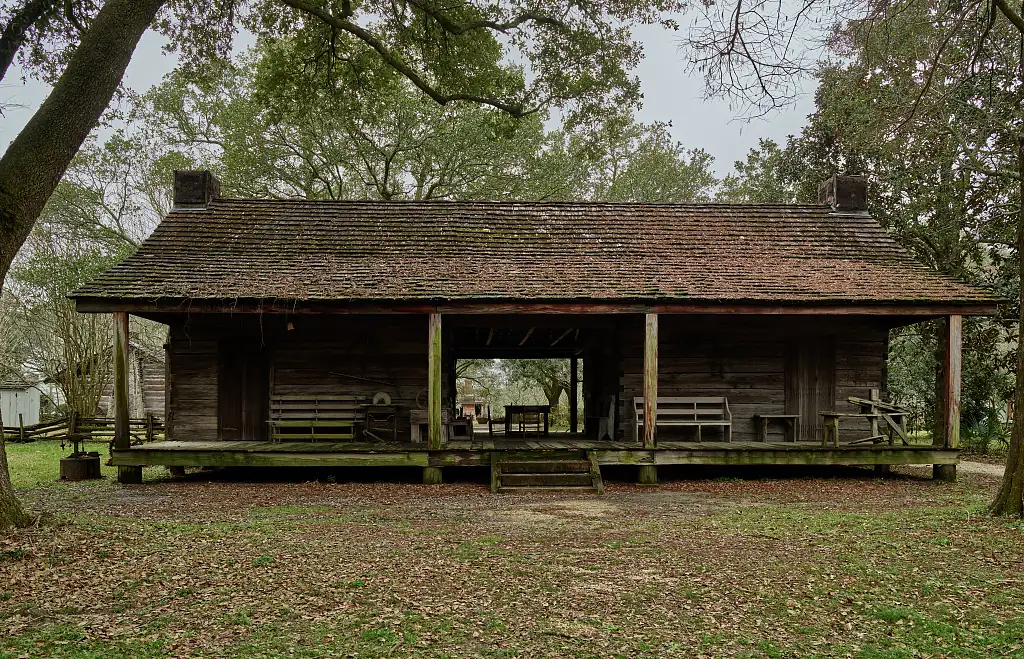
The LSU Rural Life Museum is an outdoor museum of rural Louisiana life on land that belonged to the Burden family, who gave it to LSU. More than thirty historic buildings have been gathered on the grounds, including cabins, barns, a schoolhouse, a church, a dogtrot house and plantation quarters, to show how people lived and worked in the 1800s. Next to it, Windrush Gardens add winding paths, ponds, old trees and lawns.
For a photographer this means real textures: unpainted cypress boards, tin roofs, split rail fences, brick and dirt paths. Those textures make simple clothing look right. The museum is also a place of history and teaching, including the history of slavery, so I keep the quarters and similar areas out of celebratory portraits and follow staff guidance about where we can go.
Frame 03Booking a session at the museum
The museum publishes its photography rules on its venue rentals and photography page. At the time I checked, these were the main points:
- Appointments are required for all photography sessions, booked through the museum's request form.
- There is a session fee, with separate options for the museum, the gardens or both, and it is paid on the day at the gift shop.
- The museum is available for sessions year-round, while Windrush Gardens are open for photography from about mid to late February through September 30.
- The grounds close at 4:30 pm. Staying later is possible for an extra security fee, but all buildings, restrooms and the changing room are closed after hours, so evening shooting is limited to the grounds and porches.
- Arrive with hair and makeup already done.
Rules, fees and seasons can change, and large holiday events have closed parts of the grounds to sessions before, so read the current page and confirm with the museum before you tell a family the plan.
Light at the museum
Because the gate closes in the late afternoon, the museum is often a midday or afternoon location. That is where the porches and deep overhangs earn their keep. A person standing just inside a porch, facing out, gets soft light from the open yard and a dark, textured background of old boards. In fall and winter, when the sun stays lower, the late afternoon slot before closing can be lovely.
Frame 04Fields, fences and open country
Drive out of Baton Rouge in almost any direction and the city gives way to pasture, sugarcane, soybean and, in some parishes, cotton. Open fields give long, clean horizons and a lot of sky, which makes them good for sunset silhouettes and for portraits where the family stands small in a big space.
Almost all of that land is private. Never walk into a field or climb a fence for a photograph without the owner's permission. Farmers can usually tell you which days the field will be worked and whether a crop is about to be sprayed or harvested. A friend's farm, a grandparent's pasture or a family property often beats any public spot, because you can take your time.
Frame 05Cotton and cane
A field of open cotton bolls in late summer and early fall is a striking backdrop, and children love touching the fluffy bolls. Cane fields are tall and green through summer and fall, then cut in the harvest season that runs into winter, when trucks and tractors are busy on the roads. Both crops tie a portrait strongly to the South. Families should know that cotton in particular carries the history of slavery in the region, and some will choose a different field for that reason.
Tall cane also closes in fast. I keep children on the edge of the field where we can see them, and never let anyone wander into the rows.
Frame 06Light in open country
Fields have no shade, so midday sessions are harsh and hot. I start about an hour and a half before sunset, when the sun is low enough to give warm side light and long shadows. I face people away from the sun to avoid squinting and let the light catch their hair from behind. A reflector or a white car sunshade can bounce some light back into faces. The basics of backlight and open shade are covered in the natural light guide.
| Month | Approx. sunset | Field session starts |
|---|---|---|
| Mid-February | 5:50 pm | 4:20 pm |
| Mid-April | 7:30 pm | 6:00 pm |
| Mid-September | 7:10 pm | 5:40 pm |
| Mid-November | 5:05 pm | 3:35 pm |
Times are rounded for Baton Rouge; check your date, and remember the clocks change in March and November. Summer has its own rules, covered in my notes on heat and storm season.
Frame 07What to wear in the country
- Denim, linen, cotton and knits in cream, rust, olive and dusty blue
- Boots or sturdy shoes for uneven ground, with ant mounds in mind
- Hats with a brim held in the hand, since a brim worn low shades the eyes
- Long sleeves or repellent in mosquito season
Bright neon and large logos look out of place against old wood. Solid colors age best, and a simple color scheme keeps a big group from looking busy. For coordinating a whole family, see dressing a family for photos.
Frame 08Three generations, dogs and a porch
Country settings are where I most often photograph big families. A porch gives everyone a place to sit at different heights, which solves the hardest part of a large group, and grandparents are more comfortable on a bench than standing in a field. The guide to grandparents and extended family portraits covers how I arrange those groups.
Dogs fit naturally into a farm setting too, though museums and gardens have their own rules about pets, so ask first. On private land, a dog on a long leash running along a fence line can be the best picture of the day. There are more ideas in family photos with pets.
Frame 09Combining with other settings
A country session pairs well with the oaks described in live oaks and old house grounds, since both suit the same muted wardrobe. If you would rather stay close to town, the river woods east of the city are another option, described on the Denham Springs and Livingston Parish page. Every setting in this series is listed on the South Louisiana locations page.