Craft · birds and nature
Bird and nature photography
Every year, usually as the weather finally cools, the American white pelicans come back to the LSU lakes, and every year I catch myself slowing the car to watch them. For a few weeks the lakes fill with huge white birds circling, gliding in with their wings spread and landing in a spray of water. I drove past them several times one November before I finally had my camera with me, and what I loved most was catching them coming in to land. Bird photography trains the same skills I use in portraits, fast focus and reading light, and South Louisiana is a very good place to practice, with wading birds all year and big winter flocks.
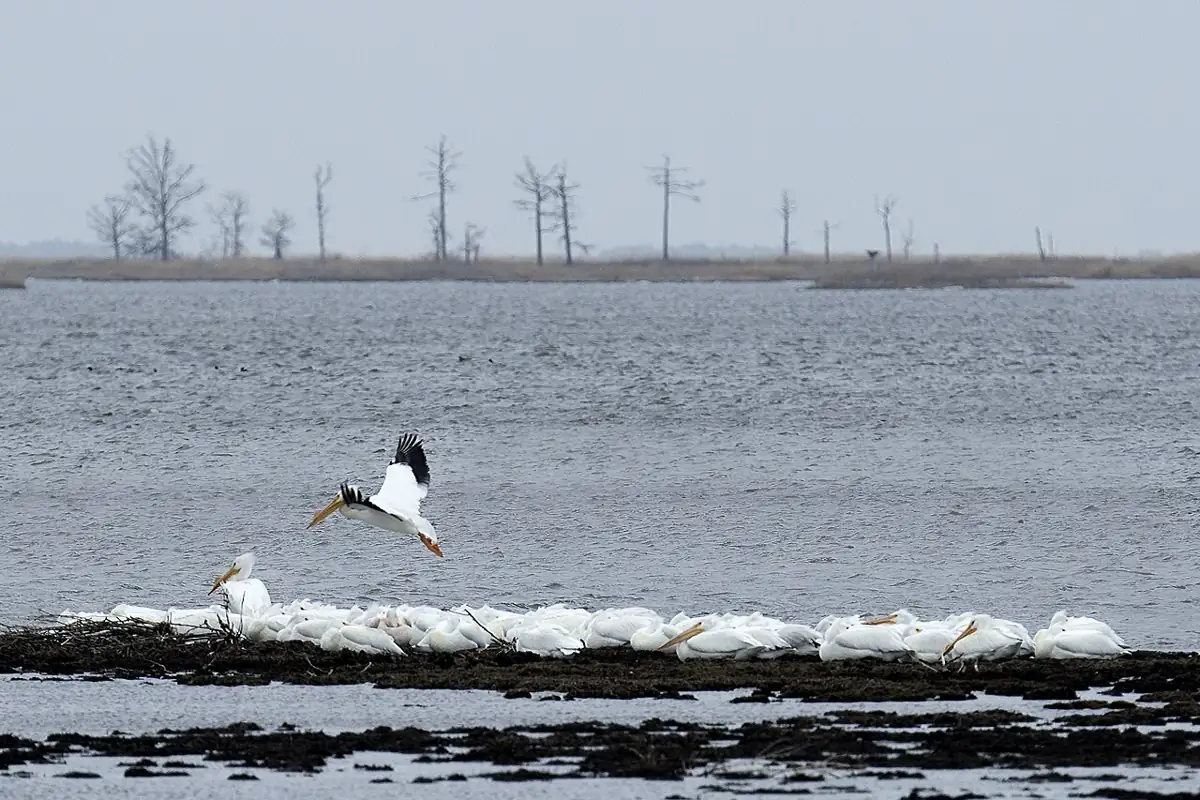
Frame 01What you can photograph near Baton Rouge
Great egrets, snowy egrets and great blue herons hunt along lake edges and bayous for much of the year. They are patient, fairly large and often stand still for long stretches, which makes them the best birds to learn on. Swamps and wildlife refuges a short drive away add alligators, turtles and songbirds in spring migration.
The white pelicans on the LSU lakes
American white pelicans are among the largest birds in North America, with a wingspan of about nine feet according to Audubon's field guide. They breed on northern lakes and spend the winter in the South, and coastal Louisiana is one of their most important wintering areas east of the Rockies. On the LSU lakes they usually turn up somewhere between late October and late November, and the big groups move on in late winter or early spring; the exact timing and the numbers change from year to year. I write more about the lakes themselves on my page on the lakes by campus.
Watch for their group fishing. They line up and drive fish toward shallow water together, and a row of pelicans dipping their bills at the same moment makes a lovely frame. Brown pelicans, the Louisiana state bird, are mostly a coastal sight and rarely show up inland.
Frame 02Lenses and settings
| Situation | Shutter | Aperture | Focus |
|---|---|---|---|
| Bird perched or wading | 1/500 to 1/1000 | Wide open to f/8 | Single point on the eye |
| Large bird gliding or landing | 1/1600 to 1/2500 | f/5.6 to f/8 | Continuous, zone or tracking |
| Small bird in flight | 1/3200 or faster | f/5.6 to f/8 | Continuous, tracking |
| Deliberate wing blur (panning) | 1/30 to 1/125 | f/8 to f/11 | Continuous, pan with the bird |
| Landscape with water | As needed, tripod | f/8 to f/11 | A third into the scene |
These are starting ranges, and I adjust them as soon as I see the first frames. A 300mm lens is a sensible minimum for birds, and many people use 100 to 400mm or 150 to 600mm zooms. A crop sensor camera extends reach, as explained in the note on crop factor. Use auto ISO with a fixed shutter speed and aperture, and let the camera raise ISO in dim light; a little noise is far easier to live with than a blurred wing.
Exposing for white birds
White pelicans and egrets are the brightest thing in the frame, and cameras tend to blow out the feathers. I usually dial in about two thirds to one stop of negative exposure compensation in sun and watch the highlight warning on the screen. Once the white feathers keep their detail, I can always lift the shadows later; burnt-out white can't be recovered.
Backgrounds and composition
A sharp bird against a busy background still looks messy. Before I raise the camera I look past the bird: dark water, a shaded tree line or open sky all make clean backdrops, while parked cars, buildings and bright reeds pull the eye away. Moving a few steps left or right often swaps a cluttered background for a smooth one. Low angles help here as well, because the background moves farther away. In the frame, I leave room in the direction the bird is looking or moving, and I try for at least one frame with a catchlight in the eye, just as I would with a person. With a big flock, look for patterns and repetition, or isolate one bird whose posture stands out from the rest.
Frame 03Photographing birds in flight
- Stand with the sun at your back and the wind in your face. Big birds take off and land into the wind, so they will come toward you.
- Pick a landing area, such as the open water where the flock is resting, and prefocus on it.
- Set continuous autofocus with a zone or tracking area, and back-button focus if your camera has it.
- Pick up the bird early in the viewfinder, while it is still far out, and track it smoothly before you press the shutter.
- Shoot short bursts as the wings come forward and the feet drop for landing.
- Leave space in front of the bird in the frame, in the direction it is flying.
Landings are my favorite moment with the pelicans: the wings spread wide, the feet stretched out like water skis, and the splash. They are big and slow enough that a beginner can catch them, which makes them a perfect first flight subject. The same tracking skills work on running dogs, by the way, which I touch on in photographing families with their pets.
Frame 04Light and position
Early morning is the best time: birds are active, the light is low and warm, and the heat has not built up. Keep the sun behind you so it lights the bird's eye and feathers. Get low, close to the bird's eye level, which gives a more intimate picture and a softer background. On a lake shore that can mean sitting or kneeling in the grass for a while.
Late afternoon works too, and in winter the low sun lasts longer into the day. Backlight can be beautiful on a heron's plumes or on spray from a landing, but expose for the bright rim and let the body go dark. Midday in a Louisiana summer is usually the worst of both worlds, harsh light and birds resting in the shade.
Frame 05Fieldcraft and patience
- Move slowly and stop often. Birds tolerate a person who does not walk straight at them.
- Learn behavior. A heron that stretches its neck or crouches is about to strike or fly.
- Stay in one place near a feeding area rather than chasing birds around.
- Use a car as a blind on refuge drives where it is allowed; many birds ignore vehicles.
- Keep the camera on and ready on the seat. I missed the pelicans more than once simply because the camera was at home.
Long lenses are heavy and awkward on a plane; if a birding trip involves flying, read my notes on traveling with camera gear before you choose a bag.
Frame 06Ethics
Never flush birds to get a flight shot, approach nests, or use playback calls in sensitive areas or breeding season. Do not feed wild birds to bring them closer. Stay on trails and follow refuge rules. If a bird changes its behavior because of you, you are too close.
On the busy LSU lakes the pelicans are used to joggers and traffic, and it is tempting to creep down to the water's edge. I stay back and let the long lens do the work, so the birds rest and feed, and other people get to enjoy them too.
Frame 07Beyond birds
The same mornings give flowers covered in dew, spiders' webs and dragonflies, a good reason to carry a macro lens for close detail. Wildlife abroad brings new subjects, such as puffins in Iceland, mentioned in my Nordic travel notes. Summer heat and storms shape when you can be out, so check the South Louisiana weather calendar before planning.
A good bird photograph also makes a wonderful print. A flock of white pelicans over dark water looks striking large on a wall; my notes on canvas and wall prints help with size and finish. Other technique guides are in the craft section.