Craft · lenses
Choosing a lens for portraits
The lens decides how far I stand from people, and that distance shapes their faces and how much of the background stays in the frame. For portraits it makes a bigger difference than the camera body. Over the years I've carried primes and zooms into nurseries, living rooms, parks and offices, and the choice usually comes down to two questions: how much room do I have to back up, and how much of the place do I want in the picture? Here is how I think it through, with working distances you can check in your own house.
Frame 01Why focal length changes faces
The distortion people blame on wide lenses comes from standing close. To fill the frame with a head and shoulders using a wide lens, you have to stand close, and at close range the nose is much nearer the camera than the ears, so it looks larger. A longer lens lets you stand back, which evens out those differences and gives the proportions most people recognize as their own face.
This is why many photographers reach for something in the 85mm to 135mm range for tight portraits and keep wider lenses for groups, rooms and pictures where the setting matters. The stretched nose comes from where you stand, so if you crop a 35mm frame taken from 3 meters away, the face looks exactly as it would from an 85mm at that same distance, just with fewer pixels.
Frame 02Working distance: how far back you need to stand
I wish someone had shown me these distances early on. The table gives rough camera-to-subject distances on a full frame camera, holding the camera vertically. Treat them as ballpark figures, since your exact framing will vary.
| Lens | Head and shoulders | Full length, standing adult | The look |
|---|---|---|---|
| 35mm | About 0.5 m | About 2 m | Lots of room in frame; noses grow if you go tight |
| 50mm | About 0.75 m | About 3 m | Natural, close to how the eye sees a room |
| 85mm | About 1.2 m | About 5 m | Flattering faces, soft backgrounds |
| 135mm | About 2 m | About 7.5 m | Strong background blur, compressed setting |
Now look at your living room. If the longest clear line across it is 4 meters, an 85mm can manage head and shoulders but not a full-length picture. Measuring that one line tells you more about what will work at home than a lens review will.
Frame 03The usual choices compared
| Lens (full frame) | Good for | Watch out for |
|---|---|---|
| 35mm | Small rooms, family groups, storytelling frames with context | Faces near the edge of the frame stretch; stay a few feet back |
| 50mm | Everyday portraits, newborns from above, half body shots | Tight headshots need you quite close |
| 85mm | Head and shoulders, soft backgrounds, outdoor portraits | Needs room to back up; awkward in small houses |
| 70 to 200mm zoom | Outdoor sessions, candid children, compressed backgrounds | Heavy, and you are far from the family |
Primes or zooms?
Prime lenses
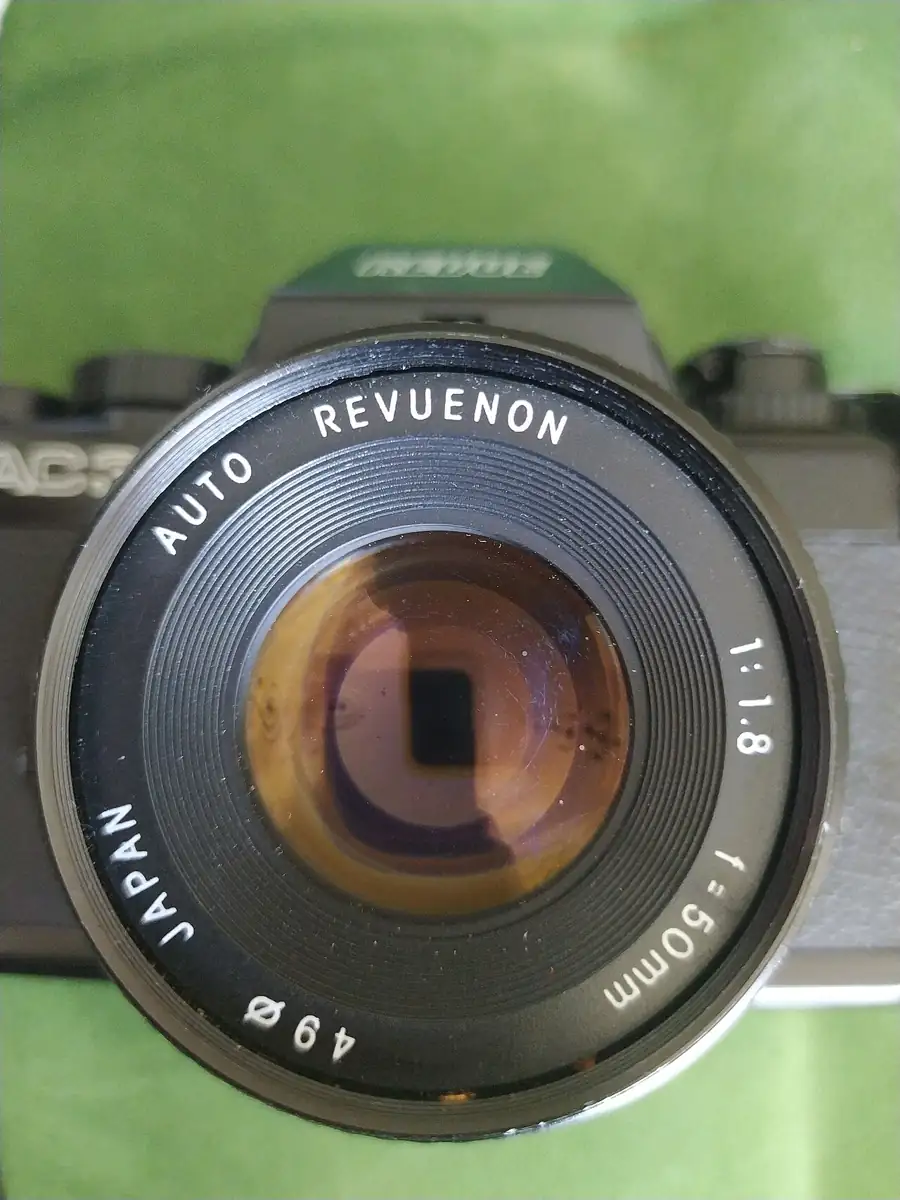
One focal length, usually a wider maximum aperture such as f/1.4 or f/1.8, and lighter. They make you move your feet, which tends to make you think about where you stand. A 50mm f/1.8 is one of the cheapest good lenses any system offers.
Zoom lenses
A range like 24 to 70mm or 70 to 200mm, typically f/2.8 at best on the professional versions. Faster to work with when children run around and you can't keep repositioning, but bigger, heavier and more expensive for the same light-gathering.
I like primes indoors, where a stop or two of extra light matters, and a longer zoom outdoors when toddlers decide the session is a game of chase.
Frame 04Crop factor on APS-C cameras
Many consumer cameras have a sensor smaller than a 35mm film frame, called APS-C. It crops the middle of the image, so a lens frames as if it were longer, by about 1.5 times on Nikon, Sony and Fujifilm and about 1.6 times on Canon. A 50mm lens on such a camera frames like a 75mm or 80mm lens on full frame, which is why the inexpensive 50mm f/1.8 makes a good first portrait lens for crop cameras. A 35mm lens on APS-C frames much like a 50mm on full frame. Crop factor changes the field of view, not the exposure: f/1.8 lets in the same amount of light per area on either sensor. The crop factor entry on Wikipedia has the sensor sizes if you want the math.
| Full frame look | On APS-C (1.5x), use about | On Canon APS-C (1.6x) |
|---|---|---|
| 50mm | 33 to 35mm | 30 to 32mm |
| 85mm | 56mm | 50 to 55mm |
| 135mm | 85 to 90mm | 85mm |
Frame 05Aperture and background blur
A wide aperture such as f/1.8 or f/2.8 blurs the background and helps in dim light. It also makes the zone of sharp focus very thin. At f/1.8 and close range, one eye can be sharp while the other is soft, and a family of four standing in two rows will not all be in focus. For groups I stop down to f/4 to f/8, and for a single person I rarely go wider than f/2 to f/2.8 unless the light forces me to.
Background blur also grows with focal length and with the distance between the person and whatever is behind them. Pulling a family 10 meters away from a hedge, then using a longer lens, often does as much as a faster aperture. That's the trick for busy city settings, used in portraits along the riverfront.
Frame 06Focusing a fast lens on faces
Hitting focus with a fast lens takes practice. With a single person I put the focus point on the eye nearest the camera, because that is the eye viewers look at first, and a soft near eye reads as a missed photo even when everything else is sharp. If your camera has eye detection autofocus, use it; it handles a wriggling baby better than I can with a single point.
Two habits help as well. Most lenses get noticeably crisper when stopped down a stop from wide open, so an f/1.8 lens used at f/2.5 often looks better than at f/1.8. And keep the lens hood on, even indoors. It blocks stray light from windows and lamps that would otherwise wash out contrast, and it protects the front element when a toddler grabs for it.
Frame 07What I'd buy first
- Start with the kit zoom you have and note which focal lengths you use most for portraits. Most editing programs can filter your favorites by focal length.
- Add a 50mm f/1.8. It is light, inexpensive and fast enough for window light indoors.
- If you shoot mostly outdoors and have space, an 85mm prime is the next step.
- Consider a 35mm if you photograph mostly at home, in small rooms or for lifestyle newborn sessions.
- For very small details, such as a baby's eyelashes or rings on a hand, a macro lens is a separate tool, explained in close-up and macro photography.
Longer telephoto lenses past 200mm belong more to wildlife than portraits; I talk about those in photographing birds and nature. And if you travel with more than one lens, the packing advice in flying with cameras and lenses will save you some worry at security.
Frame 08Lenses in practice
For a newborn session I mostly want something around 50mm on full frame, so I can stand over the baby or kneel beside a parent without backing into furniture, which is how I run the shots described in what happens at a newborn session. For a big family group with grandparents, a 35mm or a 24 to 70mm zoom gets everyone in from a sensible distance; extended family portraits has the posing side of that.
A cheap lens beside a good window beats an expensive one in a dark corner, as the guide to soft daylight indoors and out shows. When the window isn't enough, a single flash on a stand does more for image quality than a faster lens; see lighting with one off-camera flash. For work portraits, the lens advice in making a professional headshot builds on this page. Everything else is in the full list of craft guides.